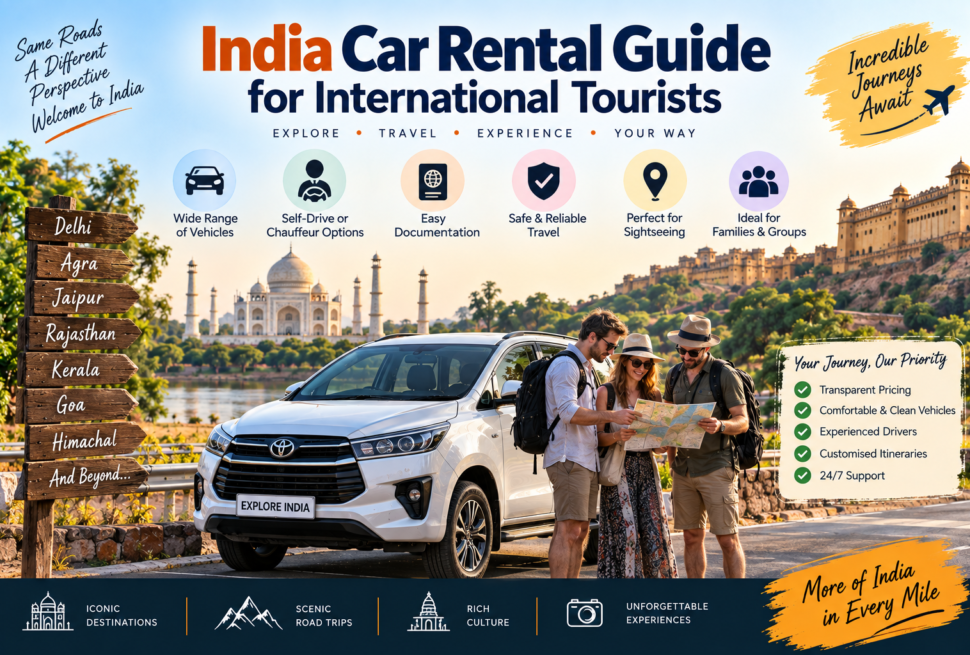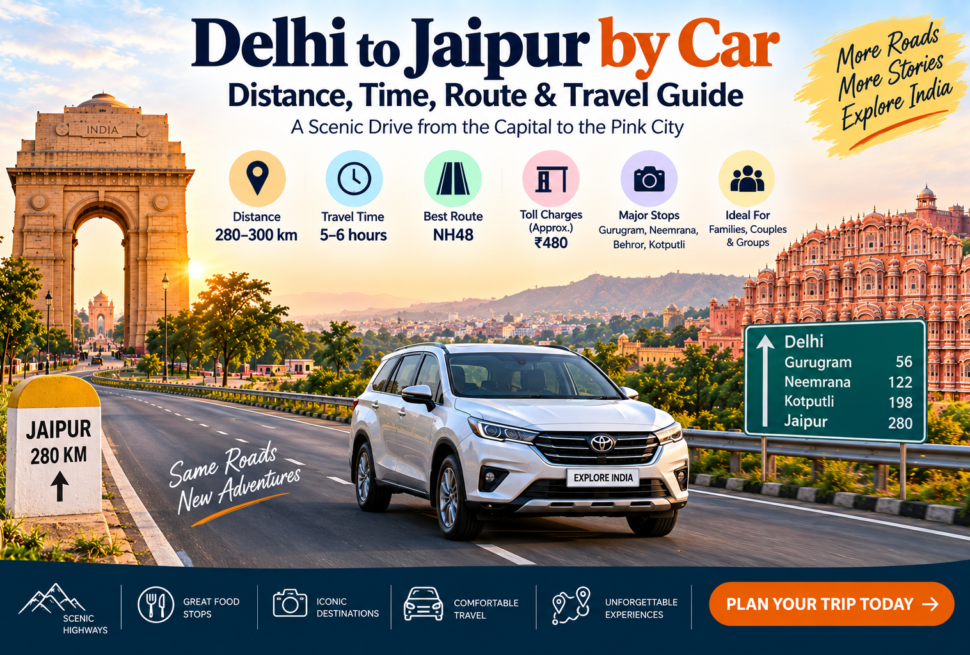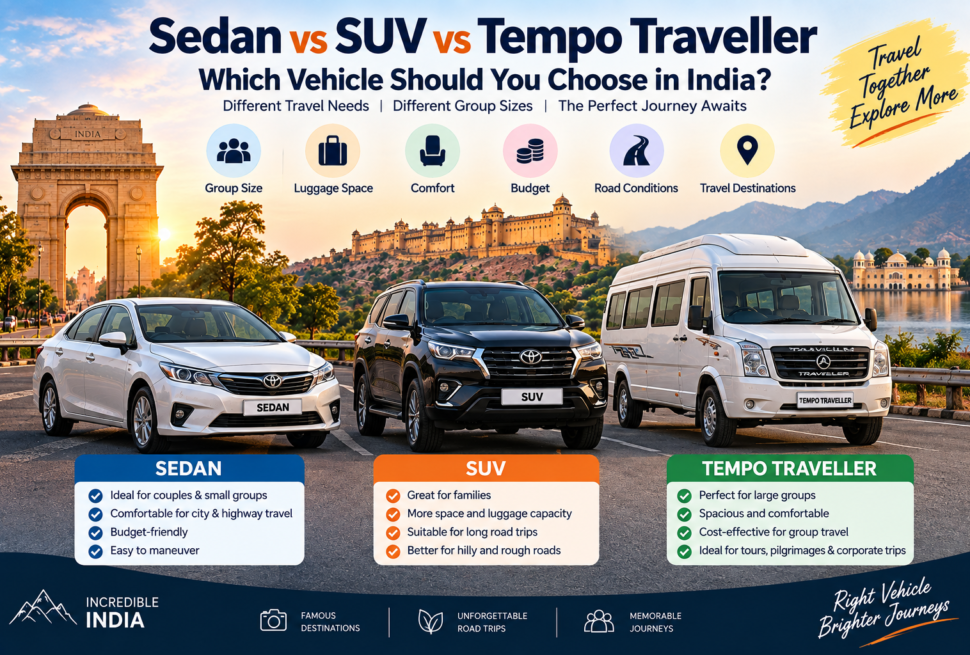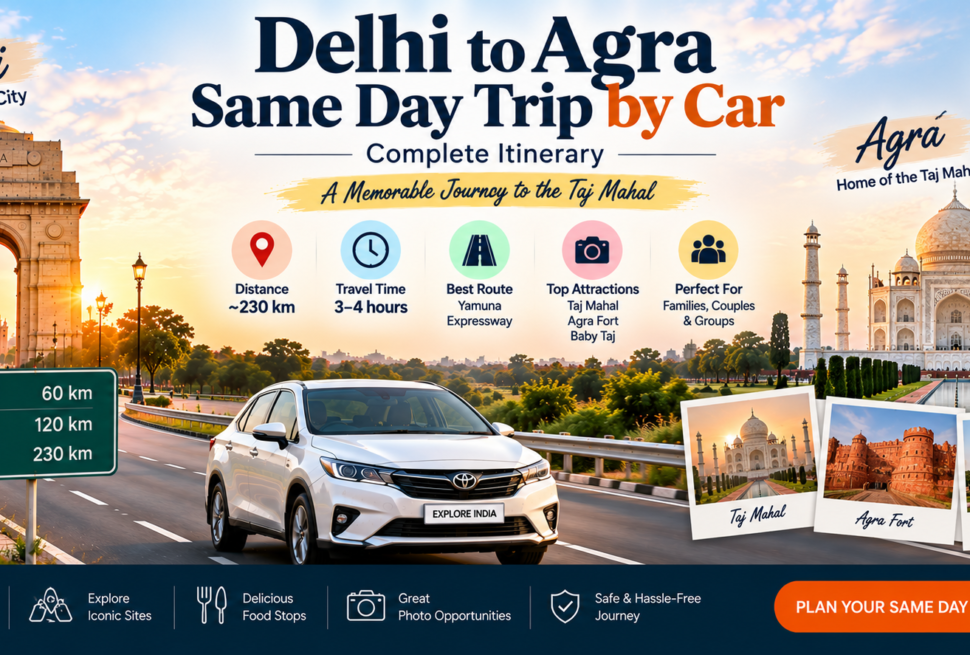
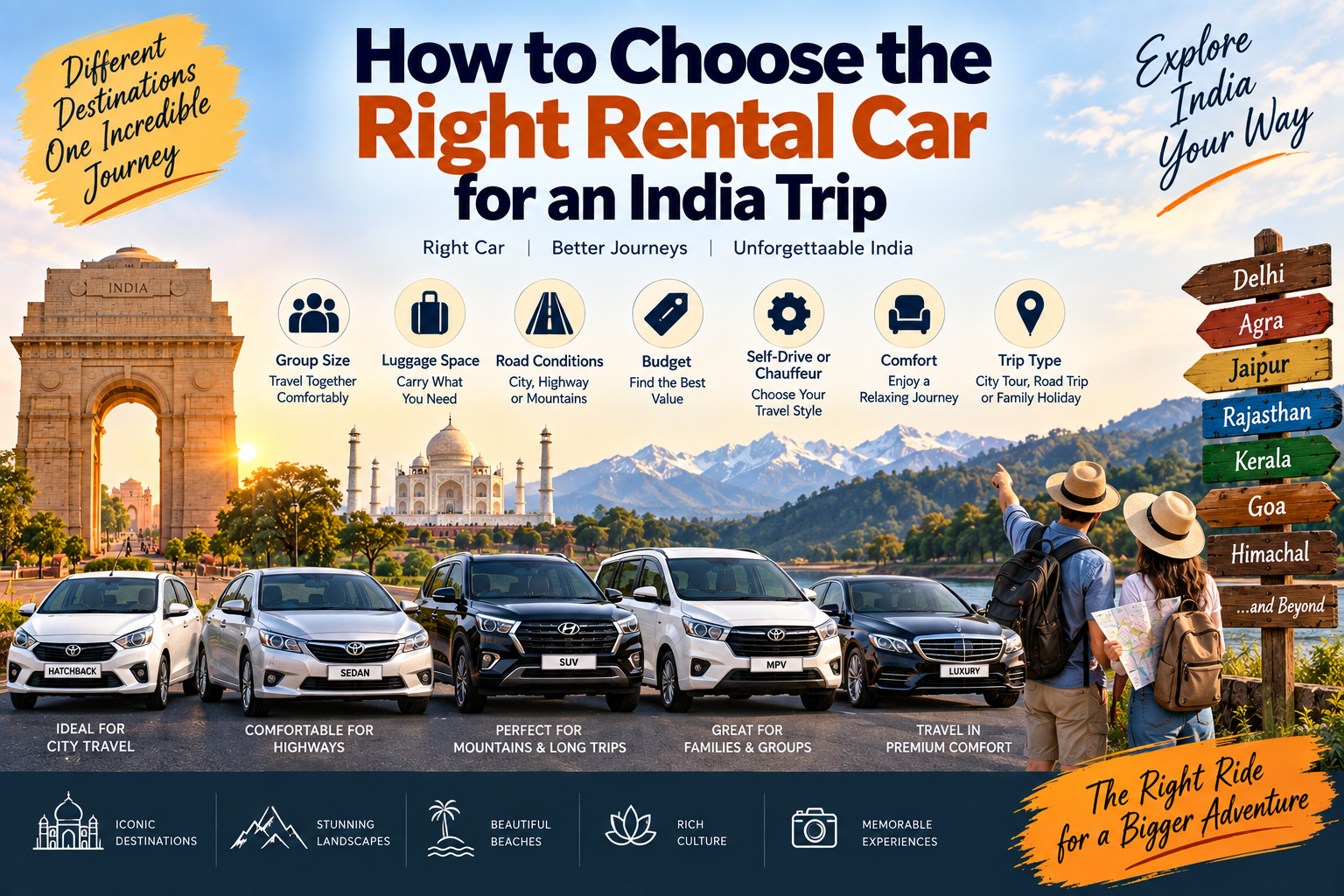
Choosing the right rental car can make a major difference to your India travel experience. India offers everything from busy metropolitan cities and modern expressways to mountain roads, desert landscapes, coastal highways, historic towns and rural routes. Because road conditions and travel requirements can vary significantly from one destination to another, the car that works perfectly for a short Delhi sightseeing trip may not be the best choice for a Rajasthan road trip or a journey through the Himalayas.
Before booking a rental car, travellers should consider several factors, including the number of passengers, luggage, destination, road conditions, rental duration, budget, driving experience and whether they want to drive themselves or hire a chauffeur.
In 2026, India’s rental market includes hatchbacks, sedans, compact SUVs, larger SUVs, MPVs, premium cars and luxury vehicles. Self-drive services are available in many cities, while chauffeur-driven rentals remain a major option for tourists travelling between multiple destinations.
This guide explains how to choose the right rental car for an India trip, with practical advice to help you select a vehicle that fits your itinerary rather than simply choosing the cheapest or most attractive car available.
SEO Information
SEO Title: How to Choose the Right Rental Car for an India Trip
Meta Description: Learn how to choose the right rental car for an India trip based on budget, group size, luggage, road conditions, comfort, self-drive and chauffeur options.
Slug: how-to-choose-the-right-rental-car-for-an-india-trip
Focus Keyphrase: How to Choose the Right Rental Car for an India Trip
Secondary Keywords:
- right rental car for India trip
- car rental in India
- best car for India trip
- rental car for India travel
- choose a car rental in India
- India road trip car
- chauffeur-driven car India
- self-drive car rental India
- best rental car for tourists in India
- car rental for family trip in India
- India car hire
- private car rental India
Why Choosing the Right Rental Car Matters in India
India is not a single type of driving environment.
A traveller might spend one day navigating crowded streets in Delhi, the next travelling on a modern highway toward Agra and later driving through the narrow roads of an old city or winding mountain roads.
This variety means that choosing a vehicle based only on price can lead to an uncomfortable trip.
For example, a small hatchback can be excellent for city travel because it is easy to manoeuvre and park. However, a family carrying several large suitcases may find it cramped on a long-distance journey.
Similarly, a luxury sedan may provide excellent comfort but may not be the most practical choice for rougher roads or mountain routes.
The right rental car should match your itinerary, passengers, luggage and driving conditions.
1. Start by Understanding Your Travel Itinerary
The first step is to look at your complete India itinerary.
Ask yourself:
- Which cities will you visit?
- How many kilometres will you travel?
- Will you mainly drive within cities?
- Will you use highways?
- Will you visit hill stations?
- Will you travel through rural areas?
- Are you planning a multi-city road trip?
- How many days will you need the vehicle?
Your route should influence your vehicle choice.
Example: Short City Trip
If you are spending three days in Delhi and mainly need transportation between your hotel, airport and attractions, a compact hatchback or sedan can be sufficient.
Example: Golden Triangle
For:
Delhi → Agra → Jaipur → Delhi
a comfortable sedan, compact SUV or chauffeur-driven vehicle can be a practical choice.
Example: Rajasthan Road Trip
For:
Delhi → Jaipur → Jodhpur → Udaipur → Jaisalmer
you may want more luggage space and greater long-distance comfort.
Example: Mountain Trip
For destinations involving steep or winding roads, an SUV or suitable MUV may provide more useful ground clearance and space.
2. Choose Between Self-Drive and Chauffeur-Driven Rental
One of the biggest decisions is whether you want to drive yourself or hire a car with a driver.
Self-Drive Car Rental
Self-drive means you rent the vehicle and operate it yourself.
This option provides:
- Freedom to choose your schedule
- Complete control over stops
- Greater privacy
- Flexibility for road trips
- No need to coordinate with a chauffeur
Current self-drive rental services offer different vehicle categories, including hatchbacks, sedans, SUVs and MPVs. Some providers operate across dozens of Indian cities.
Self-drive can be particularly attractive to experienced drivers who are comfortable with Indian traffic and road conditions.
However, international tourists should check the applicable driving-document requirements before booking.
Chauffeur-Driven Car Rental
A chauffeur-driven rental combines the vehicle with a professional driver.
This can be especially convenient for:
- First-time visitors
- International tourists
- Families
- Senior travellers
- Long-distance journeys
- Multi-city tours
- Travellers who don’t want to navigate unfamiliar roads
The driver handles the driving, navigation and parking, allowing passengers to focus on sightseeing.
Chauffeur-driven rentals are also a major part of India’s tourist car-rental market, particularly for outstation and multi-day travel.
For many sightseeing itineraries, this can be more convenient than managing traffic, parking and navigation yourself.
3. Choose the Right Car Type
Once you know how you will travel, select the vehicle category.
Hatchback
Hatchbacks are compact cars designed primarily for practical city travel.
They can be suitable for:
- Solo travellers
- Couples
- Short trips
- City sightseeing
- Budget travellers
- Small amounts of luggage
Their smaller dimensions can make parking and navigating narrow streets easier.
Current self-drive rental guides generally position hatchbacks as economical options for city driving and short trips.
Advantages
- Lower rental cost
- Usually fuel-efficient
- Easy to manoeuvre
- Easier parking
- Good for urban travel
Limitations
- Limited luggage space
- Less rear-seat space
- Not ideal for large families
- Can become less comfortable on very long journeys
4. Consider a Sedan for Highway Travel
A sedan can be an excellent middle-ground option.
Sedans generally provide more cabin and boot space than small hatchbacks and can be comfortable on highways.
They can work well for:
- Couples
- Small families
- Airport transfers
- Business travellers
- Golden Triangle tours
- Medium-distance road trips
Current rental guides commonly place sedans between hatchbacks and SUVs in terms of both space and rental cost.
A sedan can be particularly practical when you want a comfortable ride without paying for a larger SUV.
5. Choose an SUV for More Space and Difficult Roads
SUVs are increasingly popular in India because they combine passenger space, luggage capacity and higher ground clearance.
They can be useful for:
- Family holidays
- Long road trips
- Mountain destinations
- Monsoon travel
- Routes with uneven road surfaces
- Travellers carrying more luggage
Current self-drive rental guidance commonly recommends compact SUVs for highway travel and larger SUVs for mountain or more demanding routes.
Advantages
- More cabin space
- More luggage capacity
- Higher seating position
- Useful ground clearance
- Suitable for longer journeys
Limitations
- Higher rental price
- Higher fuel consumption in some models
- Larger size can make city parking more difficult
6. Choose an MPV for Families and Groups
If you are travelling with five or more people, consider an MPV or 7-seater vehicle.
Examples of this category include vehicles such as:
- Toyota Innova
- Toyota Innova Crysta
- Maruti Ertiga
- Kia Carens
The exact vehicle supplied depends on the rental operator and availability.
MPVs are particularly useful when you have:
- Large families
- Several pieces of luggage
- Group tours
- Multi-day itineraries
- Long-distance journeys
Current Indian rental-market guides list 7-seaters and MPVs as suitable options for larger groups and additional luggage.
Instead of booking two small cars, a group may find one larger vehicle more convenient.
7. Think About Your Luggage Before Booking
Luggage is one of the most overlooked factors when choosing a rental car.
A vehicle may technically seat five passengers, but that does not necessarily mean it can comfortably carry five passengers plus five large suitcases.
Before booking, consider:
- Number of passengers
- Large suitcases
- Hand luggage
- Backpacks
- Strollers
- Sports equipment
- Camera equipment
For two people with minimal luggage, a hatchback may be sufficient.
For four people with several large suitcases, a sedan or SUV could be more practical.
For six or seven passengers, an MPV may be the better fit.
Passenger capacity and luggage capacity should always be considered together.
8. Consider How Long You Will Be Driving Each Day
The duration of daily driving matters almost as much as the total trip length.
If you are driving for one or two hours per day, a basic rental car may be perfectly comfortable.
But if your itinerary involves six to eight hours of road travel several days in a row, comfort becomes much more important.
For long journeys, look for:
- Comfortable seats
- Good air conditioning
- Adequate legroom
- Large luggage space
- Good suspension
- Reliable tyres
- Sufficient cabin space
A slightly more expensive vehicle can be worthwhile if you spend many hours inside it.
9. Match the Car to Indian Road Conditions
India has a mixture of road environments.
You may encounter:
- Modern expressways
- Highways
- City streets
- Narrow lanes
- Village roads
- Mountain roads
- Desert routes
- Coastal roads
A car suitable for one environment may not be ideal for another.
City Roads
Compact hatchbacks and sedans are often practical.
Highways
Sedans and compact SUVs can provide a good balance of comfort and space.
Mountain Routes
SUVs or suitable MUVs may be more practical depending on the specific route.
Desert and Rural Routes
A vehicle with suitable ground clearance and adequate luggage capacity may be preferable.
Always check whether the rental company permits the specific vehicle to be taken to your intended destination.
10. Check Ground Clearance
Ground clearance is particularly useful when travelling on roads with:
- Large speed breakers
- Uneven surfaces
- Potholes
- Rough approaches
- Rural roads
- Mountain routes
A compact SUV generally provides more ground clearance than a low-slung sedan.
However, higher ground clearance does not mean that every SUV is designed for off-road driving.
If your itinerary includes difficult terrain, ask the rental provider whether the vehicle is suitable and whether driving on particular roads is permitted under the rental agreement.
11. Automatic or Manual Transmission?
Transmission choice is another important consideration.
Manual
Manual cars are common in India and can sometimes be less expensive to rent.
They can be suitable for drivers who are comfortable changing gears and managing a clutch in traffic.
Automatic
Automatic cars can be easier for visitors who are accustomed to automatic transmissions, especially in congested urban traffic.
This can be particularly useful in cities where traffic congestion results in frequent stopping and starting.
Some current self-drive rental listings charge a premium for automatic vehicles, although the exact difference varies by vehicle and provider.
If you are not comfortable driving a manual car, don’t choose one simply because the rental price is lower.
12. Consider Fuel Efficiency
Fuel costs can become significant during long road trips.
A small hatchback may consume less fuel than a large SUV under comparable conditions, although actual consumption depends on the model, traffic, driving style and route.
For self-drive rentals, fuel is generally charged separately from the rental price.
When comparing two vehicles, don’t look only at the rental price.
Consider:
Rental cost + fuel + tolls + parking + additional kilometres
This gives you a better estimate of the real transportation cost.
13. Understand the Rental Pricing Structure
Different rental companies use different pricing models.
You may encounter:
- Hourly pricing
- Daily pricing
- Per-kilometre pricing
- 8-hour/80-kilometre packages
- Multi-day packages
- Outstation packages
- One-way rates
For example, chauffeur-driven local packages can sometimes be structured around a fixed number of hours and kilometres, while outstation trips may use different distance and driver-allowance calculations.
Always ask what is included in the advertised price.
14. Don’t Choose a Car Based Only on the Daily Rate
A rental car advertised at a low daily price may not necessarily be the cheapest overall.
Check whether the price includes:
- Fuel
- GST or applicable taxes
- Toll charges
- Parking
- Driver allowance
- Extra kilometres
- Extra hours
- Interstate charges
- Security deposit
- Insurance or damage protection
For self-drive vehicles, fuel is generally separate and additional kilometres may be charged if you exceed the package limit.
A complete quotation is much more useful than a headline price.
15. Check the Kilometre Limit
Some rental packages include a specified number of kilometres.
For example, a package may provide a fixed daily distance allowance.
If you exceed it, an additional per-kilometre charge may apply.
This is especially important for road trips.
Before booking, ask:
“How many kilometres are included in the total rental price?”
Then compare that number with your planned route.
If your itinerary covers 1,500 kilometres, a package designed for short city travel may not be appropriate.
16. Check the Security Deposit
Self-drive rentals commonly require a refundable security deposit.
The amount varies depending on the company, vehicle and booking terms. Current 2026 rental listings and guides show deposits can range from several thousand rupees upward.
Before paying, ask:
- How much is the deposit?
- Is it refundable?
- How is it paid?
- When is it returned?
- What circumstances can result in deductions?
Get the terms in writing.
17. Check Insurance and Damage Policies
Before accepting a rental vehicle, understand what happens if the vehicle is damaged.
Ask the rental company about:
- Insurance coverage
- Damage liability
- Accident procedures
- Theft protection
- Tyre and glass coverage
- Deductibles
- Roadside assistance
Don’t assume that every rental package provides identical protection.
Read the rental agreement carefully before accepting the car.
18. International Tourists Need Extra Planning
International visitors choosing self-drive should check their driving documentation before arriving in India.
Requirements can differ depending on nationality and rental provider, but foreign travellers should verify whether an International Driving Permit and their home-country licence are required.
For chauffeur-driven rentals, the visitor is a passenger, so the driver’s licensing requirements are handled by the professional driver.
This is one reason chauffeur-driven rentals are popular with international tourists travelling on multi-city itineraries.
19. Choose the Car According to Your Group Size
A simple rule is:
1–2 Travellers
Consider:
- Hatchback
- Sedan
3–4 Travellers
Consider:
- Sedan
- Compact SUV
4–5 Travellers With Luggage
Consider:
- SUV
- Comfortable sedan with sufficient boot space
5–7 Travellers
Consider:
- MPV
- 7-seater SUV
8+ Travellers
Consider:
- Tempo Traveller
- Larger tourist vehicle
- Multiple cars
The number of passengers is only one factor. Luggage and journey duration should also influence the decision.
20. Best Rental Car by Type of India Trip
| Trip Type | Recommended Vehicle |
|---|---|
| Delhi city sightseeing | Hatchback / Sedan |
| Delhi airport transfers | Sedan |
| Golden Triangle | Sedan / SUV |
| Rajasthan road trip | SUV / MPV |
| Kerala tour | Sedan / SUV / MPV |
| Goa exploration | Hatchback / Sedan / SUV |
| Himalayan trip | Suitable SUV / MUV |
| Family holiday | SUV / MPV |
| Couple’s road trip | Sedan / Compact SUV |
| Large group | MPV / Tempo Traveller |
| Luxury holiday | Premium / Luxury car |
These are general recommendations. Actual vehicle suitability depends on the specific route, season, luggage and rental company’s terms.
21. Inspect the Car Before Starting Your Trip
If you choose self-drive, inspect the vehicle before leaving the pickup location.
Check:
- Exterior scratches
- Dents
- Tyres
- Wheels
- Windscreen
- Lights
- Mirrors
- Air conditioning
- Seat belts
- Fuel level
- Odometer
- Interior condition
Take photographs or video of existing damage.
This creates a record of the vehicle’s condition before your rental begins.
22. Check the Rental Company’s Reviews
Price should not be your only selection factor.
Look for evidence about:
- Vehicle condition
- Customer support
- Refund handling
- Deposit refunds
- Booking accuracy
- Driver professionalism
- Response times
- Hidden charges
A company with a slightly higher quotation may offer a more clearly defined package and better support.
Read recent reviews rather than relying only on old testimonials.
23. Book the Right Car for Your Travel Style
Different travellers need different vehicles.
For Budget Travellers
Choose a hatchback or compact sedan when the itinerary is primarily urban.
For Couples
A comfortable sedan or compact SUV can provide a good balance of comfort and cost.
For Families
Consider an SUV or MPV, particularly if travelling with children and luggage.
For Senior Travellers
Prioritise easy entry, comfortable seating, air conditioning and sufficient legroom.
For Photographers
Choose a vehicle with enough luggage space for camera equipment and personal bags.
For International Tourists
A chauffeur-driven sedan, SUV or MPV can be convenient when travelling through multiple unfamiliar destinations.
24. Common Mistakes to Avoid
Choosing the wrong rental car can make a trip unnecessarily uncomfortable.
Avoid these common mistakes:
Booking the Cheapest Car Without Checking Space
The cheapest vehicle may not have enough room for your passengers and luggage.
Ignoring the Route
A car suitable for city streets may not be appropriate for a long mountain journey.
Forgetting Extra Charges
Always check fuel, tolls, parking, taxes and additional kilometres.
Not Checking Transmission
If you only drive automatic vehicles, don’t assume a manual rental will be easy.
Ignoring the Rental Agreement
Read restrictions regarding destinations, kilometres, damage and late returns.
Booking Too Late
Popular vehicles may become unavailable during peak travel periods.
Not Checking Existing Damage
Document the vehicle before starting the rental.
25. A Simple Formula for Choosing Your Rental Car
If you are still unsure, use this five-step formula:
Step 1: Count the passengers.
Step 2: Count the large luggage pieces.
Step 3: Study your route and road conditions.
Step 4: Decide between self-drive and chauffeur-driven travel.
Step 5: Compare the complete rental cost, not just the daily rate.
This approach will usually narrow your options quickly.
Frequently Asked Questions
What is the best type of rental car for an India trip?
There is no single car that suits every India trip. Hatchbacks are practical for city travel, sedans can provide comfortable highway travel, SUVs offer additional space and ground clearance, and MPVs are useful for families and groups.
Is an SUV better than a sedan for travelling in India?
It depends on your route and group size. An SUV can be useful when you need additional luggage space or are travelling on uneven or mountainous roads. A sedan can be more economical and comfortable for many highway and city itineraries.
What is the best rental car for a family trip in India?
For a small family, a comfortable sedan or SUV can work well. For five or more passengers with luggage, an MPV or 7-seater is generally more practical.
Should I rent a self-drive car or hire a driver?
Self-drive provides greater independence, while a chauffeur-driven car allows you to avoid navigating unfamiliar traffic and roads. Your driving experience, itinerary and comfort level should determine the choice.
Is an automatic rental car worth it in India?
An automatic can be useful if you are accustomed to automatic transmission, particularly in busy city traffic. However, availability and pricing vary by location and rental company.
How much luggage can I take in a rental car?
It depends on the vehicle. A hatchback generally has less luggage capacity than a sedan, SUV or MPV. Always consider luggage space along with the number of passengers.
Should I choose a sedan or SUV for the Golden Triangle?
Both can work. A sedan may be suitable for couples or small groups, while an SUV can provide additional space and comfort for families or travellers carrying more luggage.
What should I check before renting a car in India?
Check the vehicle condition, rental price, included kilometres, fuel policy, insurance, deposit, cancellation policy, additional charges and permitted travel areas.
Can international tourists rent cars in India?
Yes. International visitors can use rental services in India, but those planning to self-drive should verify the applicable licence and International Driving Permit requirements before booking.
Are rental prices the same throughout India?
No. Prices vary according to city, vehicle, season, rental duration, demand, kilometres and inclusions. Current 2026 market data shows significant differences between vehicle categories and cities.
Final Thoughts
Learning how to choose the right rental car for an India trip is less about finding the most expensive or cheapest vehicle and more about finding the car that matches your journey.
For short city trips, a hatchback or sedan can be practical. For long highway journeys, a comfortable sedan or SUV may be preferable. Families and larger groups should consider an MPV, particularly when travelling with several pieces of luggage.
Your route also matters. A vehicle that works perfectly in Delhi may not be the ideal choice for a Himalayan road trip. Similarly, a small car may be economical for two people but uncomfortable for a family travelling with large suitcases.
Before booking, compare the complete cost, including rental charges, fuel, tolls, parking, additional kilometres, taxes and deposits. Check the rental agreement, inspect the vehicle and make sure you understand the insurance and damage policy.
For international visitors and travellers unfamiliar with Indian roads, a chauffeur-driven rental can simplify multi-city travel by leaving navigation, traffic and parking to a professional driver. For experienced drivers who meet the applicable requirements, self-drive rentals can provide greater independence.
Ultimately, the right rental car for an India trip is the one that fits your passengers, luggage, route, driving style and budget while keeping the journey comfortable.
With a little planning before booking, your rental car can become more than just transportation—it can make exploring India’s cities, heritage sites, mountains, beaches and countryside much easier and more enjoyable.